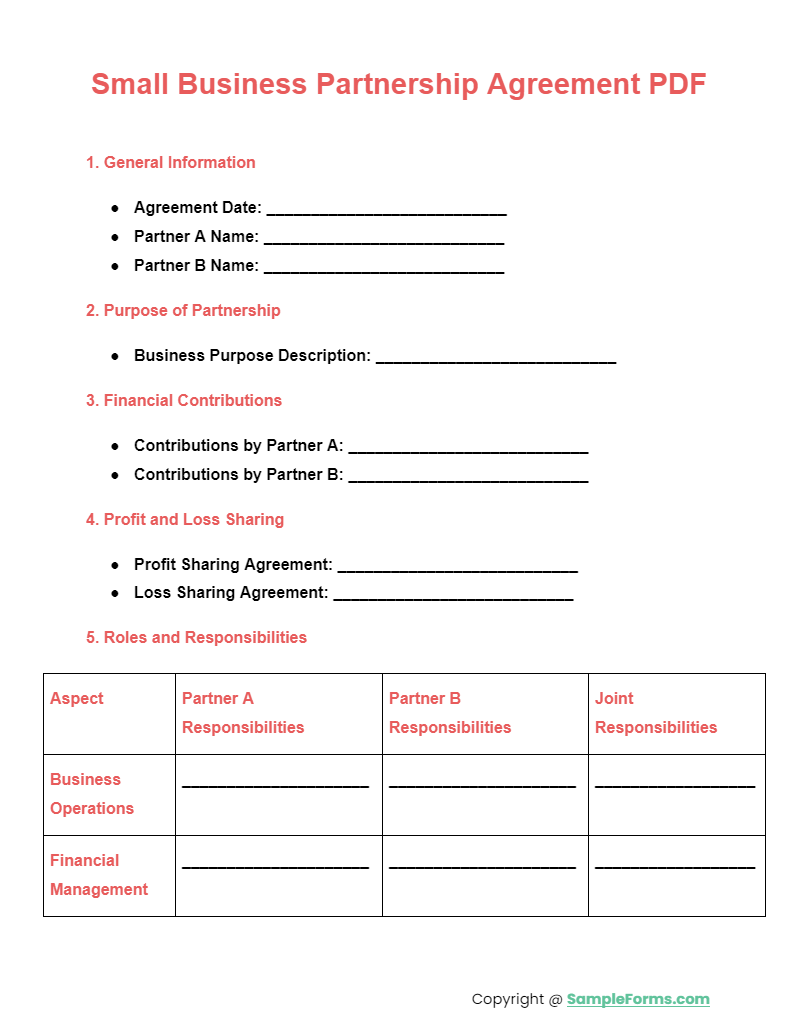
Business Partnership Agreement Template Pdf – A crucial document for any business venture, a well-drafted Business Partnership Agreement Template Pdf ensures clarity, protects both parties, and minimizes potential disputes. It’s more than just a legal formality; it’s a roadmap for a successful and mutually beneficial collaboration. This comprehensive guide will walk you through the essential components of a robust agreement, providing a solid foundation for your partnership. Understanding the nuances of this document is vital for fostering a strong and lasting relationship. The availability of a template is a significant advantage, allowing businesses to quickly establish a clear framework for their collaboration. Don’t underestimate the importance of having a legally sound agreement in place – it’s an investment in the future of your partnership. This article will delve into the key elements, offering practical advice and considerations for creating a template that meets your specific needs.
Understanding the Core Principles of a Business Partnership Agreement
Before diving into the specific clauses, it’s essential to grasp the fundamental principles underpinning a successful business partnership. A strong agreement isn’t just about protecting assets; it’s about establishing expectations, defining roles and responsibilities, and outlining how decisions will be made. Open communication, mutual respect, and a shared vision are crucial for a harmonious partnership. Ignoring these principles can lead to misunderstandings, conflict, and ultimately, the failure of the venture. A well-crafted agreement acts as a buffer against potential problems, providing a framework for resolving disagreements and ensuring everyone is on the same page. It’s a commitment to a collaborative future, built on trust and transparency.
Key Sections of a Business Partnership Agreement Template Pdf
A comprehensive Business Partnership Agreement Template Pdf typically includes the following key sections:
1. Parties Involved
This section clearly identifies all parties involved in the partnership. It’s vital to accurately list the full legal names and addresses of each partner, as well as any other relevant entities involved (e.g., subsidiaries, affiliates). Specify the roles and responsibilities of each partner, outlining their rights and obligations. For example, a partner might be responsible for marketing, while another handles finance. A clear delineation of responsibilities minimizes confusion and potential liability. It’s recommended to include a statement confirming that each partner is fully aware of their respective duties and obligations.
2. Scope of the Partnership
This section defines the scope of the partnership’s activities. What specific business activities will the partnership undertake? Will it involve a specific geographic area, a particular product line, or a particular market? Clearly outlining the scope helps to prevent scope creep and ensures everyone understands the boundaries of the partnership. It’s important to be specific and avoid ambiguity. Consider adding a clause addressing potential future expansion or diversification of the partnership’s activities.
3. Contributions and Investment
This section details the initial contributions and ongoing investment from each partner. What assets are being contributed (e.g., capital, equipment, intellectual property)? What is the amount of investment being made? How will profits and losses be distributed? A detailed breakdown of contributions and investment is crucial for accurately assessing the financial risk of the partnership. It’s important to specify the method of payment and the timing of payments. Consider including provisions for potential future investments or acquisitions.
4. Profit and Loss Sharing
This section determines how profits and losses will be shared between the partners. Will profits be distributed proportionally to each partner’s contribution? Will a fixed percentage be allocated? Will a specific formula be used to calculate the distribution? A clearly defined profit and loss sharing arrangement is essential for ensuring fairness and transparency. It’s advisable to consult with a legal professional to determine the most appropriate method for distributing profits.
5. Management and Decision-Making
This section outlines how decisions will be made within the partnership. Will decisions be made jointly by all partners? Will one partner have the authority to make decisions? Will a voting process be implemented? A clear process for decision-making is crucial for ensuring effective collaboration. It’s important to specify the quorum required for voting and the procedures for resolving disputes. Consider including provisions for dispute resolution mechanisms.
6. Confidentiality
This section protects sensitive business information shared between the partners. It outlines the obligations of each partner to maintain the confidentiality of proprietary information. This is particularly important for businesses operating in competitive industries. Specify the types of information covered and the duration of the confidentiality obligation. A robust confidentiality clause can safeguard valuable intellectual property and prevent competitive disadvantage.
7. Intellectual Property
This section addresses ownership and usage of intellectual property created during the partnership. Will intellectual property created by one partner be jointly owned? Will each partner retain ownership of their own intellectual property? A clear agreement on intellectual property ownership is essential for protecting the value of the partnership’s innovations. It’s important to define the scope of intellectual property ownership and the rights associated with it.
8. Term and Termination
This section defines the duration of the partnership and the conditions under which it can be terminated. Will the partnership continue indefinitely? Will it be terminated by mutual agreement, by breach of the agreement, or by the expiration of a specific term? Specify the procedures for termination, including notice requirements and the disposition of assets. Consider including provisions for winding up the partnership in the event of termination.
9. Dispute Resolution
This section outlines the process for resolving disputes that may arise during the partnership. Will disputes be resolved through mediation, arbitration, or litigation? Specify the governing law and the jurisdiction for resolving disputes. A clear dispute resolution mechanism can help to avoid costly and time-consuming litigation. It’s beneficial to include a clause that allows for amicable resolution of disputes.
10. Non-Compete and Non-Solicitation
This section may include provisions restricting the partners’ ability to compete with the partnership or solicit clients or employees from the partnership. These clauses are often subject to legal scrutiny and should be carefully drafted to comply with applicable laws. Consult with an attorney to ensure these provisions are enforceable.
Conclusion
A well-crafted Business Partnership Agreement Template Pdf is a cornerstone of any successful business venture. It’s a legally binding document that protects the interests of all parties involved, fosters trust, and minimizes potential disputes. By carefully considering the key sections outlined above and seeking legal counsel, you can create a template that accurately reflects your partnership’s unique needs and goals. Remember that this agreement is a living document that should be reviewed and updated periodically to reflect changes in the business environment and the evolving needs of the partnership. Investing time and effort in creating a comprehensive agreement is an investment in the long-term success and stability of your business partnership. Don’t underestimate the value of a solid agreement – it’s a critical element for navigating the complexities of collaboration.
0 Response to "Business Partnership Agreement Template Pdf"
Posting Komentar