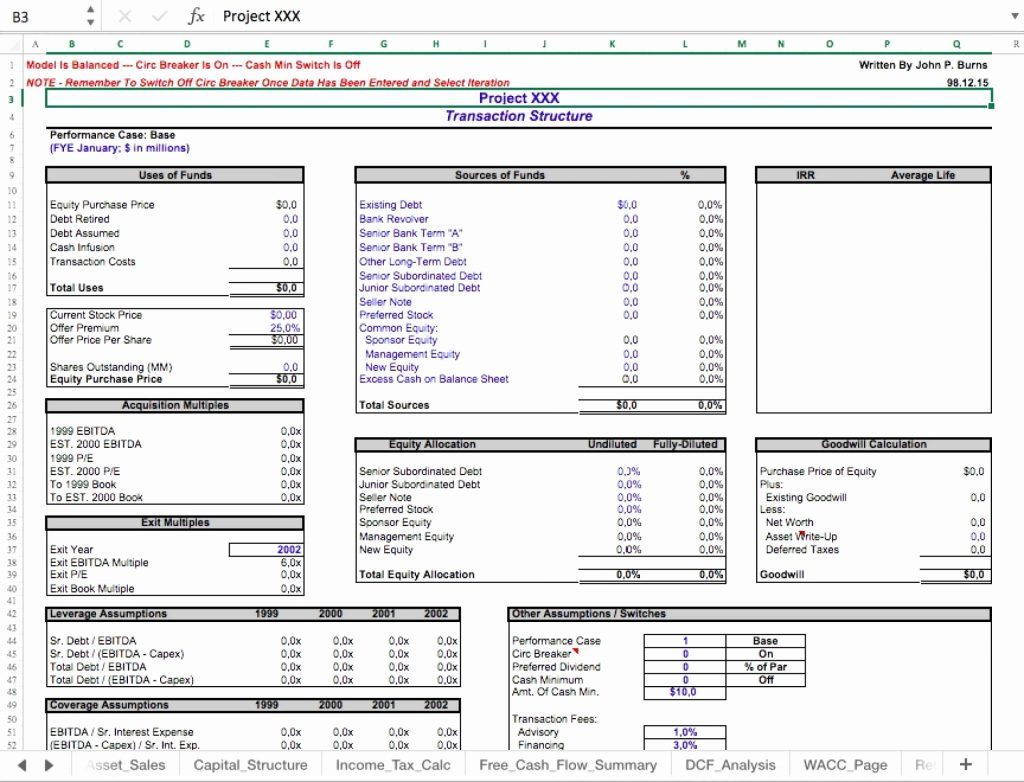
The process of determining the true worth of a business is a critical step for many entrepreneurs, investors, and executives. A robust business valuation report provides a clear, objective assessment of a company’s financial health and future potential. This article will guide you through the essential components of a business valuation report template worksheet, equipping you with the knowledge to create a comprehensive and insightful document. Understanding the nuances of valuation is paramount for informed decision-making, whether it’s securing funding, deciding whether to sell the business, or simply understanding its market value. This template provides a structured framework for collecting and analyzing data, ultimately leading to a more accurate and reliable valuation. Let's delve into the key elements that make a successful business valuation report.
Understanding the Foundation of Valuation
Before diving into the specific worksheet, it’s crucial to grasp the fundamental principles underpinning business valuation. There isn’t a single “right” way to value a business; different methods yield varying results. Common approaches include:

- Asset-Based Valuation: This method focuses on the net asset value of the company – the value of its tangible assets (e.g., property, equipment, inventory) minus its liabilities. It’s often used for companies with significant tangible assets.
- Income-Based Valuation: This method relies on projected future earnings to determine the value of the business. It’s particularly useful for companies with stable and predictable cash flows.
- Market-Based Valuation: This method compares the company to similar businesses that have been recently sold or are publicly traded. It’s based on market data and investor sentiment.
- Discounted Cash Flow (DCF) Analysis: This method forecasts the company’s future cash flows and discounts them back to their present value using a discount rate that reflects the risk associated with the investment.
Choosing the appropriate valuation method depends on the specific circumstances of the business and the goals of the valuation. Often, a combination of methods is used to arrive at a more comprehensive and reliable estimate.

The Business Valuation Report Template Worksheet – A Step-by-Step Guide
This template provides a structured approach to building a business valuation report. It’s designed to be adaptable to various business types and complexities. Let’s break down each section:

Section 1: Company Overview
This section establishes the context for the valuation. It includes essential information about the business, its industry, and its competitive landscape.

- Company Name: [Enter Company Name]
- Industry: [Specify Industry – e.g., Software, Retail, Manufacturing]
- Business Description: [Provide a concise overview of the company’s operations and what it does.]
- Legal Structure: [Sole Proprietorship, Partnership, Corporation, LLC]
- Ownership: [List key owners and their percentage of ownership.]
- Mission Statement: [Briefly state the company’s mission.]
Section 2: Financial Data – Key Metrics
This section presents the core financial data that will inform the valuation. Accuracy and completeness are critical here.

- Income Statement (Past 3-5 Years): [Include a table showing revenue, cost of goods sold, gross profit, operating expenses, and net income.]
- Balance Sheet (Last 3-5 Years): [Include a table showing assets, liabilities, and equity.]
- Cash Flow Statement (Last 3-5 Years): [Include a table showing cash flow from operations, investing, and financing activities.]
- Key Ratios: Calculate and include relevant ratios such as:
- Gross Profit Margin: (Gross Profit / Revenue) – Measures profitability.
- Operating Margin: (Operating Income / Revenue) – Measures profitability after operating expenses.
- Current Ratio: (Current Assets / Current Liabilities) – Measures short-term liquidity.
- Debt-to-Equity Ratio: (Total Debt / Total Equity) – Measures financial leverage.
Section 3: Assets – Tangible and Intangible
This section details the company’s tangible and intangible assets.

- Property, Plant, and Equipment (PP&E): [List and value each asset – e.g., buildings, machinery, vehicles.]
- Inventory: [Value of current inventory.]
- Accounts Receivable: [Value of outstanding invoices.]
- Intangible Assets: [Examples include patents, trademarks, customer lists, goodwill.] Note: Goodwill is often a significant component of valuation.
- Other Assets: [Any other relevant assets.]
Section 4: Liabilities – Current and Non-Current
This section outlines the company’s liabilities.

- Accounts Payable: [Amount owed to suppliers.]
- Salaries Payable: [Amount owed to employees.]
- Deferred Revenue: [Amount received for services not yet delivered.]
- Debt: [List all outstanding loans and bonds.]
- Other Liabilities: [Any other significant liabilities.]
Section 5: Market Analysis & Comparable Companies
This section provides insights into the industry and how the company compares to its peers.
- Industry Overview: [Describe the industry, its growth potential, and key trends.]
- Competitive Landscape: [Identify key competitors and their market share.]
- Comparable Companies: [Identify 3-5 companies that are similar to the business and provide their financial data.] This is crucial for benchmarking.
- Market Size & Growth: [Provide data on the size and growth rate of the target market.]
Section 6: Valuation Methods – Applying the Techniques
This section details the valuation methods used and the assumptions made. It’s important to clearly state the methodology and justify the chosen approach.
- Discounted Cash Flow (DCF) Analysis: [Explain the assumptions used – e.g., projected growth rates, discount rate.]
- Comparable Company Analysis: [Explain how similar companies were valued.]
- Asset-Based Valuation: [Explain the calculation and assumptions.]
- Market-Based Valuation: [Explain how the valuation was determined based on market data.]
Section 7: Valuation Conclusion & Recommendation
This section summarizes the valuation results and provides a recommendation.
- Estimated Fair Value: [State the estimated fair value of the business.]
- Valuation Rationale: [Briefly explain the key factors that influenced the valuation.]
- Recommendation: [Provide a clear recommendation – e.g., "Sell," "Acquire," "Hold."]
Conclusion
Business valuation is a complex process, but a well-structured report provides a solid foundation for informed decision-making. By carefully considering all relevant data and applying appropriate valuation techniques, you can arrive at a reliable and accurate assessment of a business’s worth. Remember that valuation is not a one-time event; it’s an ongoing process that should be revisited periodically to reflect changes in the business and the market. Investing in a professional valuation service can also be beneficial, especially for complex or high-value businesses. Ultimately, a thorough and well-documented valuation report empowers stakeholders to make strategic decisions with confidence.
Additional Resources
- [Link to a reputable business valuation resource – e.g., AICPA]
- [Link to a helpful valuation guide – e.g., Investopedia]
- [Link to a relevant industry report]
0 Response to "Business Valuation Report Template Worksheet"
Posting Komentar