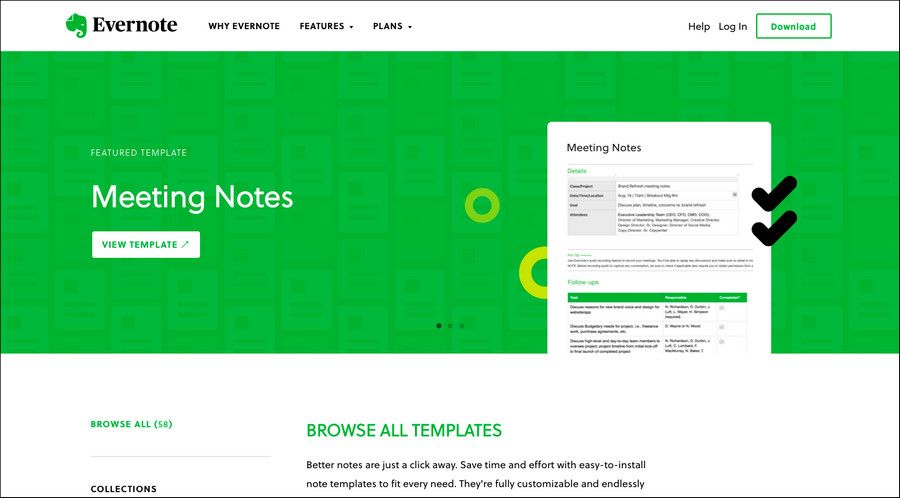
Evernote Meeting Notes Template – Capture, Organize, and Share Your Insights
Effective meeting notes are crucial for any team, project, or business setting. They're more than just a list of what was said; they're a valuable resource for future reference, action items, and knowledge sharing. A well-structured Evernote Meeting Notes Template ensures that your notes remain organized, searchable, and readily accessible. This guide will explore the key elements of a robust template, helping you streamline your note-taking process and maximize the value of your meetings. The core of a successful template lies in its ability to capture key information concisely and efficiently. It's about transforming a dynamic conversation into a tangible record. Let's dive in.
The importance of structured meeting notes cannot be overstated. Without a clear system, valuable insights can be lost, decisions can be forgotten, and follow-up tasks can fall through the cracks. A dedicated template provides a framework for capturing essential details, ensuring that everyone involved is on the same page. It's an investment in productivity and collaboration. Choosing the right template is the first step towards achieving these benefits. Consider your team's workflow and the types of meetings you typically hold when selecting a template.
Understanding the Core Components of a Template
A truly effective Evernote Meeting Notes Template should incorporate several key elements. It's not just about typing down what was said; it's about structuring the information logically. Here's a breakdown of the essential components:
- Date and Time: Always include the date and time of the meeting. This helps with chronological organization and allows you to easily track when notes were created.
- Attendees: List the names of all participants. This is vital for accountability and ensures everyone is aware of the meeting's purpose.
- Meeting Objective/Purpose: Briefly state the goal of the meeting. This provides context for the discussion and helps participants understand the meeting's relevance.
- Key Discussion Points: This is the heart of the template. Use bullet points to clearly outline the main topics discussed. Be specific – avoid vague statements like "Discussed project updates." Instead, write "Reviewed Q3 marketing campaign performance; identified key areas for improvement."
- Action Items: This is arguably the most important section. Clearly define who is responsible for what and by when. Use a consistent format for action items (e.g., "Assign to: [Name], Due Date: [Date]").
- Decision Points: If decisions were made during the meeting, document them here. Include the decision, the rationale behind it, and any associated stakeholders.
- Key Takeaways/Insights: Summarize the most important points and insights that emerged from the discussion. This helps reinforce learning and identify areas for further exploration.
Building Your Personalized Evernote Meeting Notes Template
There's no one-size-fits-all template. The best template is one that you customize to fit your specific needs and workflow. Here's a suggested structure you can adapt:
Section 1: Meeting Details
- Date: [Date]
- Time: [Time]
- Location: [Location/Virtual Meeting Link]
- Attendees: [List of Attendees]
Section 2: Meeting Objectives
- Briefly state the purpose of the meeting. Example: "To review the progress on the Alpha Project and identify any roadblocks."
Section 3: Key Discussion Points
- [Topic 1]: [Brief Description] – This is where you'll list the main points discussed. Example: "Marketing Strategy Review – Discussed the proposed campaign budget and target audience."
- [Topic 2]: [Brief Description] – Example: "Technical Challenges – Identified potential issues with the integration of the new API."
- [Topic 3]: [Brief Description] – Example: "Resource Allocation – Discussed the need for additional support for the development team."
Section 4: Action Items
- Action Item 1: [Description] – Responsible: [Name] – Due Date: [Date]
- Action Item 2: [Description] – Responsible: [Name] – Due Date: [Date]
- Action Item 3: [Description] – Responsible: [Name] – Due Date: [Date]
Section 5: Decisions & Outcomes
- Decision: [Clearly state the decision made]
- Rationale: [Explain the reasoning behind the decision]
- Stakeholders: [List of individuals involved]
Section 6: Key Takeaways & Insights
- A brief summary of the most important points and any emerging trends. Example: "The team agreed to prioritize user feedback for the next iteration of the product."
Leveraging Evernote's Features for Enhanced Note-Taking
Evernote offers a wealth of features that can significantly enhance your meeting note-taking process. Utilizing these features will make your notes more searchable, organized, and easily accessible.
- Tags: Use tags to categorize your notes by topic, project, or individual. This allows you to quickly find relevant information.
- Search: Leverage Evernote's powerful search functionality to quickly locate specific keywords or phrases within your notes.
- Notebooks: Organize your notes into notebooks to create logical groupings and improve navigation.
- Attachments: Attach relevant documents, spreadsheets, or images to your notes to provide context and support your discussion.
- Audio Recording: Record audio during the meeting to capture key discussion points and ensure that everyone is on the same page. This is particularly useful for complex discussions.
Conclusion
Effective meeting notes are an indispensable tool for any professional or team. By implementing a well-structured template and leveraging Evernote's features, you can transform your meeting notes from a tedious task into a valuable asset. Remember to consistently review and update your template to ensure it remains relevant and effective. Investing time in creating a robust note-taking system will ultimately lead to improved communication, increased productivity, and better decision-making. Don't underestimate the power of a thoughtfully organized system – it's a key component of successful collaboration. Consistent use of this template, combined with the other Evernote features, will create a powerful workflow for capturing and utilizing meeting insights.
0 Response to "Evernote Meeting Notes Template"
Posting Komentar